Showing posts with label x-men. Show all posts

Thursday, April 19, 2012

Whither a Beast Solo Series?

I was going to do this as a Should Have Been, but I think I was already pushing the qualifications of that label with Guy Gardner, and I don’t want to be the guy who needs to sub-categorize every single post, so let’s go this way instead.

Earlier this week I finished up the first collected edition of New Defenders, something I had to read on pure curiosity if nothing else. The stories by J.M. DeMatteis were pretty good in a quirky/clever way, and the art was solid as well, but certainly the draw was seeing an all-time weirdo line-up including Gargoyle, Moondragon, Cloud, Valkyrie, Over-Mind and in-between-X-gigs Angel and Iceman sharing page time.

It’s intriguing to imagine how a book like this would go down nowadays, with no real A-listers and a kinda funky dynamic as far as the team. There’s no real POV character to speak of; the most likable character—Gargoyle—is an old man in a demon’s body, the female leads range from aloof in Valkyrie to obnoxious in Moondragon, and the X-Men alums are an odd fit.

However, there was a sort of stealth franchise character hidden amongst the group, and more often than not he’s what holds them together plotwise and possibly commercially as well. Given the title of this post, I’m sure you know I’m talking about Beast.

I call Beast a “stealth franchise character” (I just coined that) because he’s never had a headlining solo gig—the point of these musings—but he’s pretty close to universally beloved as far as comic book standbys go. From the minute he joined the Avengers, X-Men fans wanted him back, and ever since that happened, Avengers fans have clamored for his return. His pairing with Wonder Man, two journeymen players in the Marvel Universe if there ever was, is fondly remembered and similarly requested often.

Right now we’re getting the best of both worlds as Jason Aaron and Rick Remender are both having a lot of fun with him and getting appropriate mileage in Wolverine & The X-Men and Secret Avengers respectively. Aaron plays him as the absent-minded professor who gets lost in his work while still being able to scrap with Sabretooth while Remender has him as the furry angel on Hawkeye’s shoulder who also clowns around with Captain Britain and Venom.

You’ll rarely find a comics fan who will speak ill of Beast (maybe get passionate about whether he should look like a blue monkey or blue cat, but that’s another discussion); people seem pleased whenever he shows up and he’s been a crowd pleaser everywhere from the 90’s cartoon to “X-Men: First Class.”

So why, outside of a limited series now and again, has he never gotten to be a leading man?

I would actually say a lot of the things that make Beast an ideal component for any team book are probably why he’s never gotten the call up to a solo series.

Beast is a humorous character, and that’s been part of his DNA since his very early days. He’s a showman who masks or discards the alienation caused his physical oddities—at first, big appendages, later, blue fur—by drawing attention to himself through gags and self-deprecation. However, this plays best when he’s in a crowd of similarly over-the-top characters, the likes of whom inhabit the Avengers or X-Men. Whereas most civilians even in the Marvel Universe would flee in terror at the site of a hairy monster with an unruly cowlick doing a softshoe routine or bouncing off walls, Captain America or Wolverine can chuckle at it with dignity while Ms. Marvel and Kitty Pryde can roll their eyes at their adorably outspoken friend.

As comic book readers, we enjoy and have affection for Beast, well, because we’re comic book readers; we flip the page expecting weirdness and are also not under any delusions that we’re reading anything but fiction (well, most of us). Our attitudes are reflected in the Avengers and the X-Men, as somebody like Beast fits comfortably into their world so they can appreciate his good qualities rather than cringe at his teeth and claws.

While another big part of Beast’s character arc is that scratch the surface of his brilliance and bombasity and he’s still an outcase, that’s not a story we’d like to see played out all the time. It’s a trope worth busting out at appropriate intervals because it’s powerful (I still cringe when I think about how Cassandra Nova taunted Beast with his inhumanity in Grant Morrison’s New X-Men), but ultimately we want to see Hank McCoy triumph over bigotry and celebrate in the welcoming arms of his extraordinary friends.

A Beast solo series would almost inevitably have to place him in the “real world,” where the entire cast isn’t super heroes and their allies, so you’re going to get more “hates and fears him” stories than maybe you’d like; it upsets the balance of the character. The two easiest avenues to resolve any arc would be to have him gain acceptance among society—which isn’t that believable and kills the tension—or have him as usual seek comfort with his buddies, in which case when does it just become a team book anyway?

Surely there are other avenues, however, and I challenge skilled writers to find them.

Another hallmark of Beast is his way-above-average intelligence and the way he chooses to deploy it. Unlike the average comic book science smarty who either hides behind his intellect, holds it back, or becomes lost in it (I’m looking at Hank Pym, Peter Parker and Reed Richards, respectively), Hank flaunts it, specifically his ginormous vocabulary. Again, since the very first issues of X-Men, a running gag has been the brutish—and later truly bestial—Beast tossing out words you’d generally only find in a spelling bee either to irk and baffle his teammates or because that’s just what he does when he gets excited.

It’s worth noting from my recollection that Beast doesn’t get a lot of thought balloons or narration bubbles, he does most of his thinking out loud. I’d reckon that’s because either consciously or subconsciously most writers get that Hank’s particular brand of language is more entertaining when we get to see others react to it.

Again, this presents a hurdle for Beast the minute he steps outside the confines of the team environment. Does Hank think in the same way (and with the same vocabulary) as he speaks? Does it lose its charm when its not making Iceman or Hawkeye feel dumb? As readers, would we even understand what he’s saying? You don’t want to strip away this quintessential aspect of the character, but at the same time, when Beast’s speech patterns become the primary narrative of a story rather than witty interludes, does it lose its appeal?

Ultimately, that’s the dilemma I think blocking Beast from moving out of the team setting and into his own adventures: the degree to which a writer may have to smooth out his quirks in order to make him a palatable central figure and at what point he stops being him as a result. Do you really want to read about an everyman Hank McCoy who speaks like a normal guy and who’s accepted by a mundane supporting cast? I don’t think I do.

But as I noted a few paragraphs back, all of these “challenges” are in reality opportunities for the qualified writer. There’s not doubt Beast is an absolutely awesome character, and just because I have my reasons why I could see a solo series starring him floundering, doesn’t mean I don’t want to be proven wrong by the literaly hundreds (if not more) of people capable of doing so. In fact, I’d say that I’m writing this at all is an invitation to show me how wrong I am.

Heck, it’s not so long ago I thought we’d never see a believable and endearing romance for Beast outside of the tired “normal human who sees his inner beauty” junk with the likes of Trish Tilby that never went anywhere significant, but then Joss Whedon introduced Abigail Brand, Kieron Gillen refined their relationship, and now they’re among my favorite couples in comicdom.

I appreciate getting to read about Beast period, and there are some high quality stories featuring him coming out more than once a month at the moment, but he’s rich enough that that should be the ground level rather than the ceiling.

Wednesday, April 4, 2012

My Five Favorite Age of Apocalypse Characters

I don’t remember how I first heard about what would become the Age of Apocalypse, but I remember being devastated.

I was a 13-year-old X-Men devotee in 1995, a time when the Internet was just having its formative yawns and certainly nothing like message boards or news sites for comics existed (that I knew of). We got the latest on what was going on with our books monthly via Wizard or Previews (if we wanted advance notification at all; a lot of times you just picked up your books off the shelf when they got there with no idea what to expect).

Whether it was the lead news story in Wizard (I distinctly remember the Adam Kubert art from Wolverine #75 of Jubilee waving goodbye) or some other way I can’t fathom, I learned there were rumors the entire X-Men line of comics (which at the time included Uncanny X-Men, X-Men, X-Factor, Excalibur, Wolverine, Cable, Generation X and my beloved X-Force as well as X-Men Unlimited) would be discontinued. No explanation beyond that, just rumblings being heard that soon the X-Men were going bye bye.

Today, after having worked at Wizard for a few years myself (with a few guys who were there in 1995), I can pretty safely say they were in on what’s to come and were playing the game perfectly as far as generating buzz. Today the pragmatist in me would also realize there was no way Marvel would jettison a franchise making as much as the X-Men because it would be bad business. As barely a teenager, my reaction was merely panic with a hint of confusion that Generation X was getting cancelled after like three issues.

A few weeks later, I called the Mighty Marvel Hotline (or whatever the 900 number Marvel had back in the day was called) and got the full down low that the X-Men would be embarking on a new epic called the Age of Apocalypse, with ever book being replaced by a new one (Astonishing X-Men, Amazing X-Men, Factor X, X-Calibre, Weapon X, X-Man, Generation Next and Gambit & The Externals to correspond with my earlier list). Again, bare minimum details, as the plot was being held tight and there was no indication on duration. I was intrigued, but also still pretty terrified I was losing my X-Men.

Of course we only ended up “losing” the X-Men for a few months and got an all-time classic story—maybe the best alternate reality story ever—out of it in Age of Apocalypse, the epic tale of what would have happened had Charles Xavier been killed before founding the X-Men, in particular Apocalypse taking over North America and Magneto forming his own X-Men as the planet’s last hope.

What I liked best about Age of Apocalypse and what made it such a great What If? was that it was very much a butterfly effect story rather than one with a wholesale and easy change. It wasn’t just “everybody is a vampire” (though there have been good yarns in that vein as well), it was “if Professor X is dead, it affects Magneto like this, which affects Quicksilver like this, which affects Storm like this…” and on down the line until the writers and artist pulling the strings got to explore an entire universe of familiar characters and what they would become under different circumstances, all tracing back to one tipped domino. There was a meticulous logic amidst the big crazy action and 90’s art of AoA that I really dug.

Nearly 20 years later, we’re two issues into an Age of Apocalypse ongoing series, something I certainly never expected to see but thus far love. The story has progressed cataclysmically since 1995, with the bulk of the characters spotlighted in the original saga dead, others transformed into villains or civilians, and new players introduced to keep things moving. Writer David Lapham makes it feel like two decades have indeed passed in this world; we didn’t get to see them, but little by little we’re learning. Roberto De La Torre and Lee Loughridge are the perfect complement on art because their style is so gritty and distinct that you would never mistake this for the Marvel Universe you know.

Like the original AoA, it’s a story not about a character or even a team, but an entire world; it’s ambitious and it’s impressive.

Though the bulk of them are dead or missing in the current book, I decided to get amped by re-examining my five favorite Age of Apocalypse characters and what makes them so.

5. HAVOK
Alex Summers’ jealousy of his older brother, Cyclops, has vacillated between gag and non-defining character trait in the traditional X-Men mythos, but in the Age of Apocalypse, it has exploded into being all that drives him in a crazy family soap opera that gives Dynasty a run for its money. Everything bubbling beneath the surface of Marvel Universe Havok erupts over into a truly loathsome villain who would mow down anything and anybody to take his brother out of the picture. Both men are adopted sons of Sinister, but while that upbringing has taken a toll on Scott, he still has a core of good waiting to be mined; not the case with Havok, who knows only hate, loathing and rage. His anger doesn’t even seem to have a focus at the degree it has progressed to; he just wants to hurt people, particularly his brother. Did Professor X have that much of a calming influence on Alex? Is this what he becomes without the love of Polaris or friendship of the other X-Men? I enjoyed trying to unravel all this, but more just liked watching Havok be a heel.

4. GAMBIT
Remy Lebeau in the Age of Apocalypse is Gambit dialed up to 11. He seemed on his way to becoming the guy we’re familiar with as an X-Man with Magneto’s friendship and Rogue’s love, but when the two of them hooked up, it sent him down the path of the ne’er-do-well he was heading on in our would without the X-Men. When we meet up with the guy, he’s running a thieves crew that includes his girlfriend Lila Cheney, Sunspot, Strong Guy and Jubilee and has the capacity to pull off intergalactic heists. Still, what I dig about AoA Gambit most is that despite the slimy exterior, when Magneto comes to him for a favor, he gives him hell about it, but still agrees to do it because it’s the right thing. More than that, I enjoy that in this darkest time, Remy Lebeau has become motivated by love more than ever, be it his unrequited feelings for Rogue or the ones for Lila he gets the opportunity to prove at the expense of reality itself (oops). In the Age of Apocalypse, where everything has gone to crap, Gambit reacts by becoming even more of a romantic.

3. SABRETOOTH
One of the big early shockers of Age of Apocalypse is that Sabretooth is a good guy. Again, though, it’s not as simple as just that because there is an explanation: Sabes started out as a Horseman of Apocalypse but couldn’t hack it so he got kicked to the curb and Magneto saved his life. The gist is that Victor Creed is still a homicidal jerk at his base, but the combination of there being a dude bigger and badder than him coupled with a good man actually believing in him is enough to bring him over to the side of angels (I tend to think it was more the former than the latter, since Professor X and others tried to give him a shot in the normal continuity; Sabretooth just needed to really get his ass kicked to scare him straight). Seeing him in the traditional Wolverine role as buddy to Wild Child, mentor to Blink, etc. was interesting and emphasized that this was a harsher world because here freaking Sabretooth was the gruff wise man/wacky uncle of the X-Men. The character obviously caught some love because he transitioned over into Exiles for years and even now is one of the few surviving original cast members in the AoA ongoing.

2. QUICKSILVER
With his father as the world’s top good guy and an actual positive role model, Pietro Maximoff turns out pretty ok in the Age of Apocalypse, one of the few characters who seem much better off with Charles Xavier out of the picture. All of Quicksilver’s untapped leadership potential gets realized as he’s not desperate to either gain the approval of or rebel against his dad, but rather just enjoys working with him and believes in his vision of a better world. In the Marvel Universe, it often seems like Pietro is just meandering from one vendetta to the next with the occasional ill-fated romance or family blow-up to break up the journey, but in the Age of Apocalypse he’s laser-focused on being a hero, not to mention darn good at it. The arrogance and impatience can still be glimpsed in his weaker moments, but he shuts it down for the greater good. He’s also got a sweet romance with Storm, something you’d never ever predict in normal continuity, but that works here with two good-hearted, driven workaholics who have found their match. After years of reading about angsty Quicksilver, it was cool to see him as one of the few bright spots in this gloomy story.

1. BLINK
I think it’s fair to say no Age of Apocalypse character has gotten more mileage than Blink. A Joe Madureira-redesigned version of the teenage teleporter who only made a handful of appearances in the mainstream reality before perishing against the Phalanx, Clarice Ferguson quickly emerged as a breakout AoA star. Partly this can be attributed to her being fairly new and thus captivating to an audience seeking just that, but I also think a lot had to do with taking the traditional X-Men trope of the spunky young girl who serves as unofficial team mascot ala Kitty Pryde or Jubilee and turning it on its ear. Held up against an old warhorse like Magneto or even a concerned mother hen like Rogue, not to mention the more aggressive versions of folks like Iceman, Storm or Banshee, Blink was indeed a bit more bubbly and optimistic, but she was still a teenager growing up essentially in hell, forced to learn survival when she should have been enjoying her best years. That Blink is fun enough that we can relate to her and maybe would want to have her as a buddy yet lethal enough to keep all her limbs and cut down Apocalypse’s goons with precision and confidence is a winning combo. Blink ended up anchoring Exiles for nearly 100 issues and proved so popular that the all-but-forgotten Marvel Universe version has even made a recent comeback.

Thursday, January 5, 2012

The Best of 2011 Comics Gift-Getting Guide pt. 2

Part one...

MYSTIC: THE TENTH APPRENTICE
When I was reading Mystic, I thought of it as a story that would appeal to fans of both Harry Potter and Hunger Games (had just seen one and read the other), but without being a rip-off of either; G. Willow Wilson accomplishes the task of tapping into multiple current sources of pop culture zeitgeist but only as building blocks to a new, vast world. I enjoyed all the CrossGen launches from Marvel, from the clever Ruse to the whimsical Sigil, but this is the one I think will hit the sweet spot of the broadest reader base, genre fans and civilians alike. It’s also another stop on artist David Lopez’s unrelenting tour of inspiring professional self-improvement.

THE PUNISHER VOL. 1
As Mark Waid did with Daredevil, Greg Rucka made a strong choice with his take on The Punisher—both books edited out of the Steve Wacker “Spider Office”—by making Frank Castle almost a secondary character or even backdrop against which the stories take place; he’s a grim presence who rarely speaks while the stories revolve around the people he affects, only roping him in for the big action scenes or major climaxes. It’s a bold, cinematic type of storytelling that has paid off in a comic experience that stands out in today’s climate. Marco Checchetto’s haunted art with a heavy Eastern influence is another completely new direction for The Punisher, really casting him as some sort of spectral angel of death and giving weight to his status as more than merely a man.

SECRET AVENGERS: SUBLAND EMPIRE
The one and done format is hardly common in modern mainstream super hero comics outside of all ages material and certainly not in a flagship franchise like the Avengers, but Warren Ellis did it to near perfection in his Secret Avengers run over the latter part of the year aided and abetted by some of the best artists in the business. Whether it was tech-based espionage with Jamie McKelvie, crazy kung fu action illustrated by David Aja or one of the trippiest time travel yarns I’ve followed in some time by Alex Maleev, Ellis delivered across the board with intelligent and entertaining standalone stories you need to give a look.

SPIDER-MAN: MATTERS OF LIFE AND DEATH
Over the course of just six issues in the early months of this year, Dan Slott demonstrated the versatility of himself as a writer and Spider-Man as a character in tales that ran the gamut of emotions as his awesome Big Time era of Amazing Spider-Man heated up and took off. Revenge of the Spider-Slayer was action-packed mayhem showcasing Spidey and an enjoyable New Avengers guest spot while No One Dies and Torch Song swung to the emotional side of the spectrum, tracking Peter Parker and his friends as they dealt with serious loss. The talented artists of ASM contributed with varied showmanship fitting each story, as Stefano Caselli brought his raw energy to the first while Marcos Martin delivered the stark pathos needed for the second (and a dream sequence in #655 that still has me applauding). Wedged in the middle: The debut of Flash Thompson as the new Venom in a story written by Slott with art by the great Humberto Ramos.

SPIDER-MAN: SPIDER-ISLAND
Continuing the Dan Slott love fest, Spider-Island was the textbook case of how to do a fun comic book event that also has major impact and pack metric tons of plot, character and action into every installment. It’s a great love letter to what makes Spider-Man a great hero and Peter Parker uniquely suited to his role with nice meaty parts as well for Venom, Anti-Venom, Kaine, Mary Jane, J. Jonah Jameson, Carlie Cooper and more, not to mention the villainous exploits of The Queen and The Jackal plus a boatload of great guest stars including the Avengers, X-Men, Future Foundation and tons others. Humberto Ramos turns in inspired art on the Amazing Spider-Man installments while Rick Remender and Tom Fowler tear it up on the Venom chapters also included in this main collection.

STORMWATCH: THE DARK SIDE
Paul Cornell’s Stormwatch is to me a great guide to and exploration of the burgeoning DC Universe provided by the New 52. It takes characters that lived on the fringe of mainstream comics as part of the WildStorm line and drops them into an environment skewing closer to the traditional DCU and we see how both affect one another. Cornell is create at brewing a strange but satisfying cocktail with strange moon eating monsters and angry towns come to life as excavated by a recast Authority, relocated Martian Manhunter, and an eclectic cast of newcomers. Cornell excels at building worlds, and here he gets to take that mandate a step further, rising to the challenge with aplomb.

SWAMP THING: RAISE THEM BONES
The other new DC horror staple that’s giving me good chills and more great work from Scott Snyder, who pays homage to the classic Alan Moore run on Swamp Thing and what came after but gets the opportunity to explore it from a whole new spin with Alec Holland as active protagonist rather than buried subconscious influence, an advantage he takes full advantage of. The ideas Snyder has come up with as far as gross new threats add to a vast tapestry begun in those seminal stories, and Yanick Paquette’s harsh, heavy lines provide the perfect style to convey the beauty of nature as well as its destructive force, plus the sick torture inflicted on these poor characters.

ULTIMATE COMICS ULTIMATES BY JONATHAN HICKMAN VOL. 1
Speaking of writers making everything old new again, witness Jonathan Hickman capturing the widescreen majesty of Mark Millar’s original Ultimates but swiveling the camera at just the right moments to provide a new spin and open up the universe. Hickman’s first issue started out with swaggering Nick Fury, cool as ever, ready to take on gods, and ended with a note of doubt in the Ultimates’ leader’s eye that told you the rules have changed. In the new Ultimate Comics Universe, Fury, Iron Man and even Thor have to work that much harder and are paying harsher prices for their hubris while the likes of Hawkeye and others need to step up. Hickman has made the threats bigger and brought the heroes down to Earth in a way that breathes new life. It doesn’t hurt that nobody draws epic like Esad Ribic, whose work alongside colorist Dean White is breathtaking, from a city full of gods to the aforementioned moment where Nick Fury realizes he’s only human.

ULTIMATE SPIDER-MAN: DEATH OF SPIDER-MAN
After over a decade of writing Peter Parker in the Ultimate Universe, Brian Michael Bendis gave his “baby” a wrenching, emotional and utterly heroic sendoff. Ultimate Spider-Man as it was had in my mind certainly not run out of steam, and indeed the “Ultimate Aunt May Boarding House for Super Heroes” made for some of my favorite stories over the last couple years; thus, the pressure was on if Bendis wanted to take out a character still in his prime, and I believe he delivered. This story has all the action, humor and life lessons that were the hallmark of Ultimate Spider-Man, but more than anything it’s about the relationships among the extraordinary supporting cast Bendis has built, the ties that bind them as close as family, and how much they’re willing to fight for one another, Peter most of all. Mark Bagley back on art, sharp as ever, was icing on the cake. I’m enjoying Miles Morales’ early adventures as the new Spider-Man under Bendis’ pen, but he’s got a tough act to follow to be sure.

UNCANNY X-FORCE: THE DARK ANGEL SAGA, BOOK ONE
There is no story I followed with more rapt anticipation this year than the Dark Angel Saga, salivating over each installment as it was the pinnacle of serial super hero storytelling for me in 2011. Rick Remender is a genius and I do believe Uncanny X-Force to be among his finest work, telling the story of a team doing the dirty work other good guys don’t want to touch; what shatters the cliché and also makes them perhaps truer heroes than any others in comics is that they don’t shrug off the awful acts they commit, they’re genuinely haunted, but they keep doing what needs to be done. In the Dark Angel Saga, hard choices come home to roost as Archangel loses control and his teammates must journey to no less than the Age of Apocalypse itself, facing down an evil alternate reality Wolverine and more, in a story remarkably ambitious for being told simply in one monthly series. Remender balances nostalgia and modern sensibilities like a mad chemist, creating an essential X-Men classic in the process. Mark Brooks’ art evokes exactly the feelings of familiarity shattered by change needed and Dean White provides rock solid continuity in the book’s visual appearance with his covers. And this is just the first half of the story!

WOLVERINE: THE BEST THERE IS – CONTAGION
I consider myself a man of fairly refined taste (not at all), but sometimes it’s nice to kick back with pure graphic violence and ridiculous excess, both of which Charlie Huston and Juan Jose Ryp execute with aplomb in Wolverine: Best There Is. It’s an unapologetic string of brutal fights, gross-out moments and crude humor, framed by Wolverine fighting against a bunch of opponents who have healing factors similar to or slightly varied from his own that allow them to do horrible things to one another without repercussions like they were Road Runner and Wile E. Coyote with claws and swords. The first six issues feature a truly vile villain named Contagion who I think could be a fixture given how simultaneously impressive and repulse Huston makes him. Ryp is uniquely qualified to provide the visual window for this grind house flick of a comic, taking a horror background and channeling it perfectly to super heroes.

X-MEN: FF
In the shadow of larger events, Victor Gischler put together this fun, action-packed little four-issue yarn about the X-Men and Future Foundation going through a portal in the Bermuda Triangle to another dimensions where they team up with Skull the Slayer and fight a bunch of aliens. It’s Comics 101 as Gischler puts together an enjoyable adventure that has the right amount of character moments—great stuff between “reformed” Magneto and Doctor Doom—and humor between fights and twists to create a story with heart that stands nicely on its own. Jorge Molina steps up his game huge on art, drawing some beautiful heroes, male and female alike, and exotic landscapes galore.

X-MEN: SCHISM
Jason Aaron has spent a few years now writing Wolverine and the X-Men have shown up now and again, but he had a pretty big assignment for his first regular go with the team, and I’d say he proved his chops quite nicely. What I like about Schism is that Aaron writes Cyclops and Wolverine as two guys with opposite but legitimate points and he’s smart about giving each a valid argument; your guts tells you Wolvie is right to want to keep mutant children off the front lines, but if you’re being pragmatic, it’s hard to argue Cyke’s stance that an endangered species needs every soldier it can get. It’s a solid battle both philosophically and eventually physically that could carry the entire story if need be, but Aaron overachieves with a deviously cool new Hellfire Club of spoiled brats that I’m happy to see have carried over into Wolverine & The X-Men with other elements of this story such as Kid Omega. As for the art—it’s Carlos Pacheco, Frank Cho, Daniel Acuna, Alan Davis and Adam Kubert jamming, so it’s pretty tough to complain.

X-MEN/STEVE ROGERS: ESCAPE FROM THE NEGATIVE ZONE
There’s an old school feel to this over-sized three-parter written by James Asmus dropping the X-Men in the Negative Zone and pitting them against Blastaar hearkening back to the days when team-ups and Annuals were a big deal in and of themselves, not just because they lead into the next big event. Steve Rogers coming to save the day comes off like a feel good moment and the story itself is a nice bit of standalone cinematic storyline. Asmus also does nice work furthering the dynamic between Cyclops and Hope, exploring Rogers’ relationship with the X-Men, and having fun with the offbeat pairing of Namor and Doctor Nemesis. The art is top notch across the board, particularly Ibraim Roberson’s turn, which looks as if he sculpted the figures out of wood and placed them on the page.

XOMBI
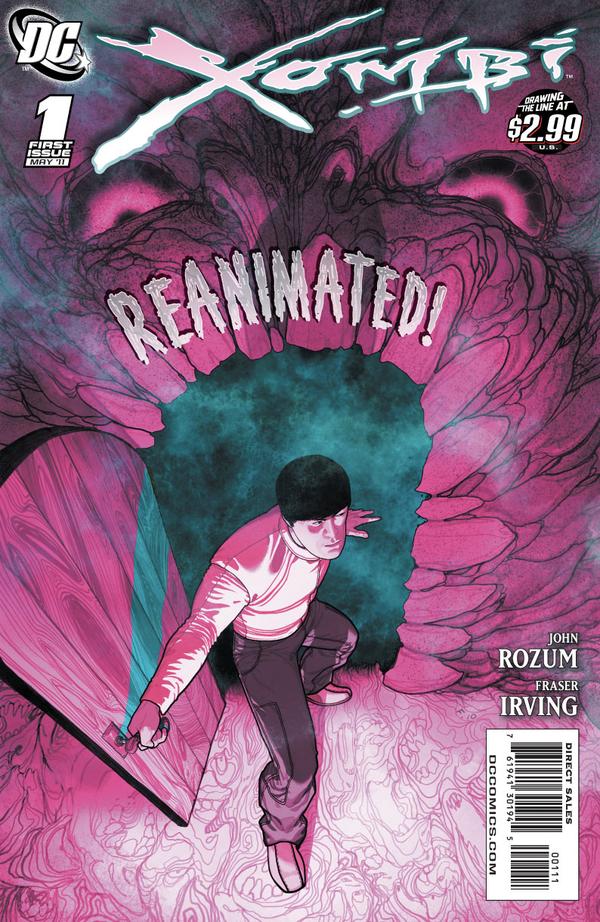
John Rozum and Frazer Irving’s Xombi is just wonderful and weird; it’s wonderfully weird. It’s intelligent and there were times I had to go back over what I had just read to fully understand it, but I never felt completely left in the dark. It’s a musing on humanity, religion, friendship and love couched in a quest adventure with super powered nuns and spooky golem creatures; I could keep going on about the story, but frankly writing a sentence like the one I just wrote usually suffices for my money to unpack the appeal. As always, Irving’s work is like nobody else in comics; he has a unique approach that brings sensibilities of fine art to the page and instill Xombi with a pedigree that makes it stand out even more than it already did—which was a lot.

Wednesday, December 14, 2011

Why I Left Comics

Despite the bold and emotional proclamations we may make when our favorite character is killed or a book we loves get cancelled, I don’t believe comic fans on the whole tend to leave their passion for the medium behind in one grand sweeping gesture. Rather, I think multiple factors tend to contribute to gradual erosion in enthusiasm that dulls the flame to the point where it’s not worth nurturing for the time being rather than stomping it out entirely.

For me, it’s tempting to simply say high school was the cut off point for my first life as a comic book fan and college brought about my second chapter (well, not that tempting, I do want this blog post to be more than two paragraphs), but certainly there was more to it.

Make no mistake though, high school played a role. For one thing, I suddenly had a lot of other interests to occupy my time, be it sports (I played soccer my freshman year and wrestled all four), the school newspaper, plays, and so on; my time to sit around reading about super heroes became more and more limited as I had other things to do. There was also the transference of funds and energy to parties and other distractions that weren’t on my radar in prior years. I saw my social outcast status fade a bit once I turned 14 or so; I don’t think I ever quite reached big man on campus level, but people seemed to generally like me enough to let me know what was going on over the weekend.

More than anything though, the friends I bonded with over comics drifted from the hobby, and certainly if there was any high school stereotype that proved true for me it was the follow the pack mentality, at least in some cases like this. With my buddies no longer making the pilgrimage to New England Comics or wanting to talk X-Men at lunch, those things held less interest for me as well (although in a story I can now chuckle at, I did continue “covertly” trekking to the comics shop every couple weeks for awhile, acting like I had stopped reading comics when I was still buying a few, and ran into a friend of mine who was doing the same; we both were mortified and didn’t acknowledge the encounter for some time, actually until I ran into him at New York Comic Con last year and said “Remember when…”).

It wasn’t just social contributors though. Comics lost me in the mid to late 90’s because a lot of the stuff that had fueled my fandom seemed to coincidentally wind down around the same time. There was good stuff like Grant Morrison’s JLA, Kurt Busiek and George Perez’s Avengers and more I wouldn’t experience for a bit after they came out because a lot of the stuff I was reading conspired to provide me with a convenient jumping off point. Here’s where I abandoned ship on the books that had been my childhood/young adolescent favorites…

What would be roughly a year-long process of me slowly going from a healthy number of monthly comic book purchases to none began in July of 1995 with the conclusion of the Age of Apocalypse. Whereas today I’m able to appreciate that event as the fun alternate reality epic it was, at the time, it was one of the first proclamations to a naïve 13-year old that comics changed. To that point, while I had been aware on some level of creators coming and going, directions changing and so forth, for the most part I still saw my most cherished books and characters as remaining in a state I could recognize them, typified by the 90’s X-Men titles, driven by a never-ending soap opera about people in colorful costumes drawn by guys with a splashy style that matched at least in part the Saturday morning cartoon show.

I remember reading in Wizard how the plug was going to be pulled on the X-Men books with no real explanation beyond that and not learning about the concept behind Age of Apocalypse until a couple weeks later via the Marvel Hotline (as a former Wizard employee now, I have to wonder to myself how much of the story they knew at the time and held back to help Marvel build an air of history; need to ask Brian Cunningham or Pat McCallum next time I see them). Comics were still vitally important to me at the time and in a childlike way that the idea I would “lose” so many of my favorites really shook me up (if 13-year-old me had been around for the New 52, he may have had a stroke).

When the X-Men books resumed their normal runs post-AoA (and without the Internet we did not know at the time when that would be if ever at the time), I regarded them with caution, feeling they had burned me once and I didn’t want to experience it again (I’m aware of how melodramatic that sounds, but I was 13 and hadn’t had a girlfriend yet, so work with me). In particular, I was unwilling to give the new incarnation of X-Force, once among my top titles, a chance. Fabian Nicieza, my favorite writer at the time, jumped off and was replaced by Jeph Loeb, whom I knew nothing about at the time. Tony Daniel, whose art I was really getting into, was replaced by Adam Pollina, whose style was not just radically different than the “X-Men house style” of the time, but just about anything I’d ever seen beyond those Vertigo books I never bought; he also almost immediately ditched the varied costumes for a uniform purple and yellow look.

But more than anything, the mission statement of the book was changing entirely, with the team going from a group of teenagers living on their own (with their gruff cyborg mentor) to moving back into the X-Mansion. As I have come to know Jeph to be a talented writer and a swell dude to boot, I apologize for not giving his run more of a chance, but there are few things less cool to a 13-year old than his heroes essentially moving back in with their parents. As the capper, Cannonball, my favorite character in the book, was “graduating” to the X-Men, so it felt like it was time for me to do the same.

I started picking up Justice League America around the time Superman died to get a better sense of the DC Universe. Truth be told, I was never that into it and didn’t feel like it was fulfilling that goal by letting me know what The Ray, Fire and Bloodwynd were up to on a monthly basis. It became more of a reflex buy for me the same way Silver Surfer or Iron Man was; a book I didn’t love, but I did like having a lot of new comics to read every month. After Zero Hour, when Gerard Jones took over as writer and centered the book a lot around the weird love square between Nuklon, Fire, Obsidian and Icemaiden with The Flash maybe getting something to do every three issues, I lost interest quickly. I stuck around because they dangled the carrot of Guy Gardner coming back to the team, but once it became evident he wasn’t sticking around, I dumped the book in August of 1995.

I began reading Captain America in 1993 or so admittedly because of the stunt “Fighting Chance” storyline where Cap’s Super Soldier Serum was going bad and he only had a year to live. Yes, it was goofy with the pouch-filled vest, the armor and Jack Flag, but I ate up every chapter of Mark Gruenwald and Dave Hoover’s year-long story. When they jumped off the book (and Cap disappeared mysteriously) in September of 1995, I did the same, figuring I’d come in for this story only and didn’t have any interest in a long term commitment (I did the same thing more or less with the Death and Return of Superman). Ironically, the next run was the to-this-day highly regarded Mark Waid/Ron Garney collaboration cut short but Heroes Reborn and I would not get to read it until years later.

I had tried to give the main X-Men books a chance even after I dropped X-Force, but that didn’t last long. I was kind of intrigued by the Onslaught mystery and loved Joe Madureira’s art, but weirdly Age of Apocalypse really botched it for me as I just couldn’t get into the characters as I had before. Having gone back and caught up on what I missed during the years I was gone since, I kind of wish I had stuck with it, because stuff like Operation: Zero Tolerance and the later Joe Kelly/Stephen Seagle run was right in my wheelhouse, but I said goodbye to the comics that had really been my childhood lynchpin during the fall of 1995, though I would continue following their animated adventures for another two years.

I bounced in and out of the Spider-Man books for a lot of the Clone Saga, Amazing Spider-Man and Web of Spider-Man being my primary titles of choice. Because that era was my entry point, I knew no other Spider-Man, and just assumed it had always been full of mysterious strangers, shocking reveals and omnipotent villains just like X-Men. As I began to cotton to the fact that this was not really the case and the creative teams waxed and waned between restoring the status quo to “the good old days” but then lurched back into another clone showing up to keep that thing running, I strained a bit from feeling like I was caught in the middle of a tug of war. When Ben Reilly took over as Spider-Man would have seemed the ideal jumping off point, but I was still somewhat under the impression the saga was finally winding to a close; around the time Spider-Carnage debuted in April of 1996, I gave up.

I’m sure it won’t surprise any regular readers of this blog to learn that New Warriors was the toughest comic for me to give up—in fact, I never did. I stuck with the book all the way to its cancellation with issue #75 in September of 1996, the same month I started high school interestingly and poetically enough (childhood’s end and all that). The stuff that had driven me off other books didn’t faze me when it came to the Warriors. Fabian Nicieza left with issue #50, but I found Evan Skolnick to be a very capable successor. Nova, Namorita and Night Thrasher were written out, but I stuck around for Justice, Firestar, Speedball and the new recruits. Even the altering of the seminal logo wasn’t enough to get rid of me (and that was a big deal, I assure you). I may have missed an issue here and there, but that was only because I was going to the shop less and less, so sometimes I’d forget the shipping schedule and they’d sell out, as New Warriors was not a book my retailer was getting in bulk.

As I’ve said before, I felt New Warriors ended on an appropriate note, with Skolnick bringing the full team back together and I do feel like those 75 issues constitute a complete story for me that subsequent revamps have left untouched. Still, it was a seismic shift for me as a fan, with my favorite comic being cancelled (despite my letter writing campaign of one letter to Marvel Vision) and me re-evaluating how into all this I still was.

Superboy was my favorite DC character as a kid (I liked the concept of The Flash, but didn’t know the person behind the mask that well yet). It was oddly serendipitous that at almost the exact same time New Warriors was coming to an end, Karl Kesel and Tom Grummett, the creative team that introduced Superboy and crafted the first two-plus years of his book, were moving on. If I had still been buying a lot of comics, I likely would have kept up with Superboy, but as I was pretty much done by the fall of 1996, their exit seemed an appropriate sign. In fairness, I did give the new creative team a few issues and really wanted to like it given how much I enjoyed Ron Marz on both Silver Surfer and Green Lantern, but even though they kept the same supporting cast and setting, the book felt different enough that it wasn’t too hard to move on (little did I know that 15 years later Superboy would be completely unrecognizable to a kid who grew up reading about him).

Strangely, as best I can tell, the final comic I was reading on a reading on a regular basis was Legion of Super-Heroes. This was odd because I’d come into the book late (I didn’t start until after Zero Hour in 1994), the characters had no recognition outside of comics (I never watched a cartoon with them or anything) and…well, Legion was just an odd book for me to end on. Don’t get me wrong, I thought that era was great, but it’s wild to me that I hung on with Legion of Super-Heroes longer than I did X-Men, Superboy and New Warriors. The split of the team and marooning half of them in the past where they suddenly weren’t as unique likely contributed to my severing ties.

(I should note the fact that I dropped my final two DC titles during Final Night speaks not to a disdain for that story, which I like, it was just coincidental timing)

And so as 1996 drew to a close, I was out of comics. I would check in now and again if I happened to spy a rack in a CVS or something over the next couple years and always checked what they had when I went to a bookstore, but for the most part, I was comics-free from 1997 to nearly 2001.

That, of course, is another story…

Tuesday, December 6, 2011

Avengers VS X-Men Classic

It's time for another lame apology post about not posting more frequently lately, but if you saw the news today, you now know I was busy prepping for the announcement of Avengers VS X-Men, the major Marvel event of 2012. Further, I was getting ready for our very cool Livestream event tomorrow, during which we'll have all the creative big guns on to interact with fans in a neat new kind of format.

So while this week will still be packed with a lot of work that may keep me away from the Table, let me leave you with a very special CLASSIC look at Avengers vs X-Men...

...from issue #3 of the 1996 volume of Captain Marvel where Avengers Forever cast member Genis-Vell threw down with yours and my favorite not-really-an-X-Man-but-tried-to-help-during-Fear-Itself-and-he's-really-awesome...X-TREME! I've never read it, but dang, given my love for Adam-X, the former Legacy and all things Fabian Nicieza, why the heck haven't I?

Enjoy AvX!

Oh, and for those who are tired of seeing only the women of comics do the "brokeback" pose...

For the ladies! And fellas who like fellas! And weird Legacy fetish people!

Sunday, November 6, 2011

Leather Fetish

I’m currently in the process on working on a fairly epic series with Marvel.com video whiz Rich “The Dragon” Herrera that should hopefully be up in the next couple weeks on the site in time for the 600th issue of Fantastic Four. Without giving away the game, we’ve got about three hours or so of footage interviewing Tom Brevoort about the history of the FF from start to finish with plenty of anecdotes and neat facts along the way. It was basically like taking a master class in Marvel from a gent very qualified teach it and one of the cooler experiences I’ve had in a very cool career.

One of my favorite bits from the whole thing, oddly enough, was when we got to the 90’s and Tom spent a substantial spot of time talking about the period where the Fantastic Four got leather jackets and specifically that The Human Torch had a leather jacket (“Was he cold? He’s on fire!”). Tom of course acknowledged that the folks working on the book at the time, Tom DeFalco and Paul Ryan, were just going with the general trend in the industry at the time, but as those were the comics coming out when I was a kid and I was part of the audience who more or less said “we would like to see The Human Torch in a leather jacket,” it got me thinking (again).

I’ve said it before, and I’ll say it again (right now, in fact): If you wanted your comic book character to look cool in the 90’s, you gave them a leather jacket with option of earring, ponytail and possible razor stubble. But did “looking cool” actually translate to “being cool”? Heck, did it even look cool? Let’s examine…

FANTASTIC FOUR
Y’know, from a functional standpoint (if not a fashion one), leather jackets really aren’t that out of place on the Fantastic Four. After all, they’re more explorers than super heroes at heart, so it does make a degree of sense they’d want plenty of pockets to carry around gear for wherever they’re headed and whatever they’ll encounter so they can always be prepared (and also stay warm, I suppose). Although Tom is right that a jacket offers very little use to the Torch, since he’s got built in weaponry and it would take excess time to treat anything he’s going to be carrying around or picking up in asbestos or whatever. And The Thing would never actually use anything but his fists so long as those are handy, plus he’ll tear through those suckers frequently enough to make the Hulk’s purple pants budget look frugal. And a jacket would actually hinder The Invisible Woman since at least part of her power hinges on not being noticed, which becomes more difficult with something making noise, causing wind resistance, etc. Ok, so maybe Mister Fantastic could wear a leather jacket from a functional standpoint.

WONDER WOMAN
Covered this recently, but the answer is no, Wonder Woman should not wear a leather jacket (in my opinion). Her gear is more than just a costume, it’s a uniform; the honor guard of a proud people symbolizing their greatest champion yada yada yada. You can alter it slightly (as has been done currently), but in story there’s a certain level of prestige and heritage that’s integral to Diana’s character, while on a real world level Wonder Woman has one the most recognizable costumes in comics and you shouldn’t be covering that up with a leather jacket (or bike shorts). To be fair, there was a very valid story reason why she wore what she wore—she wasn’t Wonder Woman anymore so keeping the garb would be disrespectful to her mother and her people—plus it was only ever designed to be a short term gig, but Diana should never be a slave to fashion trends.

THE X-MEN
X-Men and leather go together like peanut butter and jelly; it’s a beautiful and symbiotic relationship. In the 80’s, you had Mohawk Storm’s gear, in the 90’s you had the brown jackets that carried over from the comics to the animated series, and this century you had the black and yellow (and white) gear Frank Quitely introduced. It’s my belief that the reason the X-Men floundered commercially in the 60’s and early 70’s was not due to lack of Wolverine, but because they were hung up on spandex. Also, Gambit would probably curl up in the fetal position and weep if you took his duster away from him, and that’s a story nobody wants to see (unless Mike Carey has a really good angle on it, maybe).

SUPERBOY
A thousand times yes. That Superboy to this day is not sporting a leather jacket, an earring, John Lennon sunglasses and a fade cut is a crime against fashion. And since he was supposed to be not that much older than me when he was introduced, it made total sense he would emulate the same looks I did (particularly when his genetic role model had a mullet). I only wish his aesthetic dynamic had stopped aging along with his physical body.

THE AVENGERS
No.

THE LEGION OF SUPER-HEROES
There are aspects of the Five Years Later run of Legion of Super-Heroes that I enjoy, but on the whole, making the best bright and shiny future in comics into the typical dystopian fare was a misstep. It felt wrong all the way to the way the characters dressed, since colorful attire with potent symbolism was central to the “carrying on for the greatest heroes ever” Legion conceit while the drab gear the FYL crew wore signaled how out of place they were. Only Ultra Boy and Timber Wolf are street enough to rock leather jackets (Karate Kid could if he wanted to, but he would never want to).

CAPTAIN AMERICA
What I said about Wonder Woman, probably magnified. Cap is literally draped in the American flag; play that all out, or don’t play it at all. Covering up the symbol he’s proud/brazen enough to wear in that manner is not Steve Rogers at all. He’s also all about grace and agility, so all that extra weight is no good (again, there was a reasonable story reason, and the character was actually against the change, but it was still not so hot).

NIGHTWING
Actually never wore a leather jacket, but he made a disco collar and mullet reasonably cool well past their respective expiration dates, so if anybody is gonna bring it back, Dick Grayson is the man. Also: pixie boots.
Related Posts Plugin for WordPress, Blogger...